Tuesday, September 27, 2011

Ditch That Protein Powder

I found this awesome blog that I really like. I am posting this in its entirety.

Protein Powder in a Smoothie is not Healthy
If there’s anything that greatly concerns me, it’s ladies who are pregnant drinking smoothies fortified with protein powder and munching on other high protein/low carb “health foods” in their quest to reach the magical number of protein grams per day recommended by their obstetrician or midwife.
When I was pregnant with my third child, I was horrified at one prenatal visit to find a basket of soy protein bars in the waiting room! This was at a birth center staffed by midwives no less!
While adequate protein intake is indeed important during pregnancy, getting this macronutrient via highly processed protein powders and high protein foods is a disastrous choice.   This is because these same ladies that are drinking high protein smoothies and protein bars are very likely avoiding saturated fat at the same time.   A diet high in protein and low in fat rapidly depletes Vitamin A stores.
Whole foods containing large amounts of protein naturally include protective amounts of fat such as eggs, grassfed beef and other meats. On the other hand, high protein processed foods are devoid of any fat in most cases making them particularly dangerous.
Depletion of Vitamin A stores during pregnancy is a dangerous problem as Vitamin A is critical to preventing birth defects such as cleft palate, cleft lip, major heart malformations, and hydrocephalus.  Vitamin A is also the “beauty vitamin” responsible for symmetry in physical and facial features.
Vitamin A deficiency from consumption of high protein foods is not assisted by prenatal vitamins either as these worthless pills do not contain true vitamin A but instead the synthetic version, Vitamin A Palmitate or the plant based version beta carotene – little of which is converted to true Vitamin A.
Vitamin A depletion when consuming high protein processed foods is also risky for the average individual as well.  Symptoms of Vitamin A depletion include:
  • Heart arrhythmias
  • Kidney problems
  • Autoimmune disease
  • Thyroid disorders
Negative calcium balance is also a risk with high protein, lowfat diets which means that more calcium is lost than what is taken in.  Consequences of negative calcium balance include bone loss and nervous system disorders.
Know anyone who drinks a high protein smoothie everyday for lunch who develops a bizarre neurological disorder out of the blue?  I personally know several.
I’ve wondered about the stories in the news recently of young, healthy, vibrant male athletes, some only in high school, who inexplicably drop dead during competition.  Could these young men be eating lots of protein, much of it processed, while on a lowfat diet in order to build muscle and strength as recommended by bodybuilding magazines?   Such misguided advice would rapidly deplete Vitamin A stores which could potentially lead to heart arrhythmia and sudden death.

Other Problems with High Protein Processed Foods

Besides depletion of Vitamin A stores, high protein processed foods contain potentially large amounts of MSG in the form of protein isolates.   Separating protein from its food source during manufacturing results in the creation of MSG – the amino acid glutamic acid gone bad.   Therefore, MSG is present in high protein processed foods but it is not on the label because it is not technically added to the final product.  It is only created during manufacturing and therefore can be conveniently unlisted on the label.
Don’t buy into the “low temperature dried” protein powder fallacy as well.   While low temperature processing and drying of protein powders is a less damaging manufacturing method, it still denatures the protein.  Whey protein in particular is very fragile and cannot be dried or powdered.
A good rule of thumb is that no protein powder is a safe protein powder!

Good Alternatives to Protein Powder

Need a protein boost in smoothies and want to avoid the protein powders now that you realize the dangers to your health in using them?   Try gelatin instead – it has 7 grams of protein per tablespoon.  Gelatin is a colloidal substance which means it attracts digestive juices to itself similar to raw foods full of enzymes.  Hence, gelatin is helpful to the digestion and contains a protein kick to boot.
Another option would be to add nutritional yeast (Frontier is the best brand as it has no additives and is low temperature dried) which has 8 grams of protein per serving.
Be aware that even natural gelatin contains small amounts of MSG, so if you are particularly sensitive, you may wish to choose nutritional yeast as the better alternative.

Sarah, TheHealthyHomeEconomist.com

The Herbal Infusion “Wonder Water” Effect

This is from Sarah at Healthy Home Economist: link
The terms “herbal infusion” and “herbal tea” are typically used interchangeably.
The two terms are in fact quite different as a properly prepared herbal infusion is much more potent and easily absorbed than plain herbal tea.
If you plan to use herbs therapeutically as in use of nettle tea during pregnancy to tone the uterus and prepare for natural childbirth, it is best to prepare herbal infusions instead of herbal tea.
The ease of assimilation and increased potency of herbal infusions is due to careful preparation which involves boiling of the water and steeping of the herbs for anywhere from 30 minutes to 8 hours depending on the type of plant matter used.
The boiling of the water releases any dissolved gases from the water into the air which are not reabsorbed by the water due to the tight fitting lid on the steeping jar.  These dissolved gases can interfere with the rapid and complete assimilation of the nutrients released into the water by the herbs as they steep in the cooling water.
This boiling of water to release any dissolved gases and then cooling of the water in a glass jar with a tight lid to restrict the gases from redissolving back into the water is referred to as the “wonder water” effect.
Using the wonder water principle, how should herbal infusions be properly prepared?
Very easily as it turns out.

Preparing Herbal Infusions

Roots and Bark
If making an herbal infusion using the roots or bark of a plant, use one ounce of plant matter per pint of water to be used.
Place the correct amount of plant matter at the bottom of a glass mason jar and fill to the top with boiling water.  Screw the lid on tightly and leave at room temperature for 8 hours.
Leaves
Use one ounce of dried leaves per quart of water.  Place the leaves in a quart mason jar and fill to the top with boiling water.  Tighly afix the lid and leave at room temperature for 4 hours.
Flowers and Seeds
One ounce of flowers per quart of water should be steeped in boiling water as it cools in a mason jar with a tight fitting lid for no more than 2 hours.
One ounce of seeds are steeped in a pint of boiling water, again with a tight fitting lid on a mason jar and only for 30 minutes.

Herbal Infusion Dosage and Storage

Once the herbs have steeped for the proper amount of time, strain out the plant matter and drink 2 cups per day if you weigh between 125 – 150 lbs until the infusion is used up.
Add an additional one half cup per day for every 30-40 lbs additional weight.  Similarly, if you weigh less than 125 lbs, reduce dosage by one quarter cup for every 15-20 lbs.
Herbal infusions spoil rapidly so it is best to make and use them up as soon as possible.   Store unused portions in the refrigerator for no more than a day and then prepare a fresh batch.
Sarah, TheHealthyHomeEconomist.com
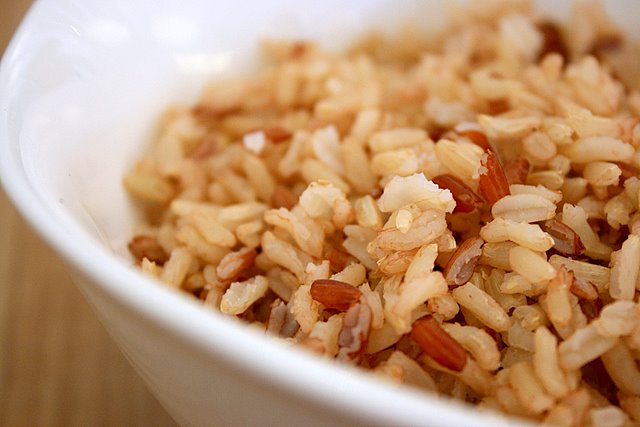
What? White Rice Better Than Brown?

From the Healthy Home Economist:  link
*My last videoblog titled “Healthy Chinese” drew some comments from folks questioning my choice of rice.
Why was I using white basmati rice instead of brown?   Isn’t brown rice the healthier choice, after all?
Ok, I’ll spill the beans, rice.   Here are my reasons …

Truth is, neither my husband or myself have ever enjoyed brown rice.   Every time we eat it, it just seems to not sit very well in our stomachs.  It, well, uh, sits like a brick for lack of a better word.
I’m never one to force feed a food to myself that doesn’t intuitively seem to be something my body enjoys receiving – even if politically incorrect.   So, for our entire married life (19 years and counting!), I’ve always served white basmati rice in our home.
White rice just seemed to digest a whole lot better for us.   That to me was reason enough to choose it over the brown rice.  
You are what you digest, after all – not necessarily what you eat!
End of story?    Well, not quite.
You see, a few years back at the annual Weston A. Price Conference, I became familiar with a new book called Fiber Menace.    The author, Konstantin Monastyrsky, was a speaker at the Conference that year and his talk about the dangers of a high fiber diet was really buzzing around amongst the Conference attendees.
Now, Mr. Monastrysky’s point about the dangers of a high fiber diet was in relation to high fiber from grains, not fruits and veggies.   In other words, folks who eat a bowl of All Bran every morning to keep the bathroom visits regular are unknowingly ripping their insides to shreds.
The basic premise of Fiber Menace is that grain fiber plays a leading role in many gut related ailments including colon cancer.
When I first learned of this information, my preference for white rice over brown rice started to make more sense.   Perhaps the brown rice didn’t digest that well because of all that fiber?  
Chalk one up for the white rice.
A second piece of information which seemed to further validate my preference for white rice came in the Spring 2010 Issue of Wise Traditions magazine (p. 28-39).  
Ramiel Nagel, of Cure Tooth Decay fame, wrote a thought provoking article in that issue on the devastating effects of phytic acid in the diet.    Phytic acid is a very powerful blocker of mineral absorption in the gut.
In this article, Mr. Nagel writes that brown rice is very high in phytic acid and that soaking reduces this potent anti-nutrient by very little.   He also maintains that the traditional method for preparing brown rice is never to eat it whole (with only the husk removed), but rather to pound it in a mortar and pestle in order to remove the bran layer too – coincidentally, the primary source of the phytic acid.
Nagel goes on to point out that experiments have shown that milled rice, the rice that results from this pounding process, has the highest mineral absorption from rice.   Mineral absorption from whole brown rice is much less as the phytic acid from the bran greatly interferes with the absorption process.
Which is Better?   Brown Rice or White?
So it seems that brown rice is not necessarily a healthier choice than milled white rice.    Obviously, whether you choose one or the other is a personal preference, but I hope this information helps you sort through the decision with a bit more clarity.
As for me and my family, we will be sticking with the white basmati rice (white basmati rice is more nutritious than plain white rice).   Intuition told me many years ago that brown rice was not something that was sitting well in my stomach or my husband’s and it seems that as the years go by, more research is coming forth to indicate that this decision was the right way to go after all.

Saturday, September 10, 2011

Pickles

Link to article


  Easy Lacto-Fermented Dill Pickles

I cannot begin to tell you how thrilled I am to bring you this Russian classic – lacto-fermented dill pickles – known to Russians as maloslnye ogurzi. Unlike the more familiar vinegary dill pickles, the acid in these is produced by the activity of beneficial lactobacilli, which occurs when you expose vegetables to a large amount of salt in an oxygen-free environment.
A close relative of sauerkraut and kimchi, these cukes are both delicious and a breeze to make, with the only downside being their inability to be kept for a long time. Not that it’s an issue – at our house, they disappear faster than I can ferment a new batch. The upside is of course the fact that the beneficial bacteria in these are alive, making them a healthful accompaniment to many meals.
6046225667_21c77c4597_z
If you have never tried these, expect the flavor to be somewhat different from what you might be used to. Not at all vinegary, these are mostly sour and salty, with perhaps a slight touch of bitterness that is not at all unpleasant.
Meanwhile, the method itself is absolutely elementary (making it my favorite during this busy time of year):
_DSC0079

Prepare your produce and pack it into crock/jars:

  • These can be made either in a ceramic crock, like my 2-gallon crock above, or a mason jar (or several).
  • I like to choose really small cucumbers for pickling as they are usually the crunchiest.
  • The pickles will be their crispiest when pickled the day they have been picked.
  • Wash your cukes thoroughly using a vegetable brush. Take special care to clean between all the little bumps as dirt could lead to spoilage.
  • Wash your crock in hot, soapy water and rinse well.
  • Trim off both ends to facilitate the fermentation and to remove the blossom end, which contains the enzymes that promote softening.
  • Pack your cukes tightly into a crock or a mason jar, along with whole garlic cloves, lots and lots of whole peppercorns, and whole dill stalks, stems and all. I like to have some dill on the bottom and some on top. Another very traditional addition would be oak or black currant leaves, both of which promote crispness and add a wonderful aroma. Note that all of the above ingredients should be thoroughly washed as well.
On adding whey: While Sally Fallon recommends adding whey to your lacto-fermented pickles, it is entirely unnecessary for the fermentation to take place, nor is it traditional.

Prepare the brine (makes enough for 4 quart jars):

  • 4.5 tablespoons of pickling salt (which contains no additives that could interfere with the fermentation)
  • 2 quarts of water (if you live in town and don’t have a well, filtered or distilled water is your best bet)
Add salt to the water, bring to a boil, and boil until the salt has dissolved.
_DSC0085
Pour the boiling brine over the contents of your crock or jar(s).
_DSC0123
If using a crock, weigh the contents down with a plate to assure that everything is submerged, hence creating the anaerobic environment conducive to the growth of lactobacilli.
If using a jar, you can weigh the contents down with some oak leaves (my husbands’ method), or just by packing everything so tight that nothing can float to the top.
_DSC0128
  • Do not seal your jars. Place a clean, moistened cloth over your jar or crock instead, securing with a rubber band or a piece of twine.
  • Leave your jars on the counter at room temperature (it doesn’t matter whether or not the jars are next to a window) for 3 days.
  • In 3 days, remove the cloth, taste your pickles, and if you like the taste, screw on a lid and transfer them into the fridge. If you feel that your pickles could use some more acidity, however, feel free to leave them on the counter for another day or until the desired flavor has been achieved.
_DSC0013
  • Note that the brine will turn milky/cloudy (above) and may develop white foam on top, the bottom, or the contents. It may also appear slightly slimy, and will grow increasingly so after you’ve transferred your jars to the fridge. These are a normal part of the fermentation and need not be a reason for concern.
  • Once refrigerated, the pickles will last for a couple of weeks, but their acidity level will increase with time as they continue to ferment slowly in the fridge (hence the increasingly cloudy brine). Because of their short life, don’t make more than your family can consume within that time frame.
Enjoy!

Monday, September 05, 2011

History of Vitamin 'C'


From Radiant Life:

We are often asked about all natural Vitamin C and how it compares to Ascorbic Acid.  What's wrong with Ascorbic Acid? How does it differ from natural Vitamin C?

Thousands of bottles of ascorbic acid are purchased everyday under the misguided assumption that ascorbic acid is the same as vitamin C. In reality, ascorbic acid is an isolated nutrient that is part of vitamin C but it is not the whole vitamin C.
You are getting cheated if you buy ascorbic acid thinking it is vitamin C. But that may be only a partial injustice! Studies over the last several years demonstrate that people taking high doses of ascorbic acid put themselves at risk for a number of health challenges. One study demonstrated that doses of 500 mg a day or more of ascorbic acid increase the incidence of arterial plaque buildup. Another study indicated that gallstones are more likely to appear in those taking ascorbic acid.
You may ask, what about all the studies done by Linus Pauling and other reputable researchers who have proven the benefits of Vitamin C and ascorbic acid? Let us put a little perspective on this:  

Back in the 1930's ascorbic acid was isolated out of little red peppers by Dr. Albert Szent-Gyorgyi who won a Nobel Prize for his work. What he also found, which has mostly been ignored until recently, was that ascorbic acid was far more biologically available and active while it was still in the red pepper.  

Scientists of the era of "Better Living Through Chemistry and Science" (which we have been experiencing for the last sixty years) decided to take the discoveries about Vitamin C and "improve" on Mother Nature.

They found that extracting ascorbic acid from natural foods, such as the red peppers, cabbage, cranberries, gooseberries, or acerola berries, is relatively expensive. Ascorbic acid can be created in the laboratory much less expensively (and of course much more profitably). Scientists discovered that they could take corn syrup, mix it with hydrochloric acid, and voila: ascorbic acid! (By the way, the corn is more likely than ever to be genetically modified and of course not organically grown.)

Years later, scientists discovered what Dr. Szent-Györgyi had discovered about ascorbic acid: it is not as effective when detached from the whole food matrix! So they went about trying to determine what other factors there could be in the whole food that would make the ascorbic acid work better.

First, they discovered the importance of bioflavonoids, so they figured out how to produce these synthetically in the laboratory, to be added to the ascorbic acid. Then they found that ascorbic acid worked better as a mineral ascorbate and they worked on that! Then they found that fat-soluble ascorbic acid was superior, because it went directly to the liver vs. water soluble ascorbic acid. In fact if you put 100 mg of ascorbic acid in the body, within a few hours at least 90% of it would be excreted in the urine. If you put 10 times more into the body to account for a 90% loss it would cause diarrhea. So they experimented with various things and concluded that if you attach the ascorbic acid molecule to another molecule, in one case a metabolite, the ascorbic acid will stay in the body longer (they didn't seem to care why it stayed in the body longer, but it stayed in the body longer and hopefully that was a good thing).

Today there is a broad variety of ascorbic acid products with various things attached to them. With all this research, time, thought and dollars being put into creating a synthetic vitamin C, the fact remains that none of them can come even close to the potentials of what Mother Nature makes. One important factor that science has not been able to duplicate is the special kind of energy that holds living food together. Whether this energy is found in the enzymes or in the energy patterns of whole food structures, it is unlikely that science will ever be able to reproduce it in a laboratory. This may be one of several reasons why studies have shown that the body will absorb close to 100% of the vitamin C that is consumed as part of a whole food, whereas barely 10% of the "stripped down" ascorbic acid is absorbed.

Again it is an issue of what we are willing to put into our bodies. Mother Nature has created foods for us that are complex and designed to be metabolized by our bodies in a synergistic way.

Natural whole food sources of vitamin C include: Amla, Camu, and Acerola

Friday, September 02, 2011

Beautiful Pro-Life article from the Chicago Sun Times

Article on Amanda


“A mother’s arms are made of tenderness and children sleep soundly in them,” as the famous Victor Hugo verse goes.
Facing adversity, criticism and an uncertain future for her conjoined twins, Amanda Schulten says she chose life.
Despite the devastatingly low probability of survival, the single Marengo mother-to-be said that, for her, there was just no other option.
Joined at the heart, her daughters — whom she’s already named Hope and Faith — should be given a chance to live, Amanda said, no matter how long those lives may be.
Strong in her Catholic religious beliefs, Amanda said she loves her children unconditionally and cannot interfere with God’s will.
“He has a plan for me, and for them,” she said. “We never know when our last day will be. We have to enjoy it, and appreciate health while we have it.”
Amanda has created a blog about her experiences at amanda-faithhopelove.blogspot.com, which tells the story of her journey throughout the pregnancy. On the main page is the poignant poem she penned, “I Love You.”
“No matter what happens, my soul will never leave you; If difficulties come here, I will never disappear,” the poem begins.
“I’m sure you would be proud to call me momma,” she writes, “for you are a special gift to me.”
Dark days
With delivery inevitably soon, Amanda has made it a long way from April 1, when she first learned she was carrying twins during a routine ultrasound at Elgin’s Sherman Hospital.
“My family thought it was an April Fools joke,” Amanda said. “We were so excited, but we wondered why they didn’t give us pictures.”
Later that evening, Amanda received a phone call from her doctor saying she needed to come in the following Monday morning.
Not thinking much of it, she went to the appointment alone, where she was given the distressing news.
“The doctor said the babies won’t make it, and termination is the best option,” Amanda said. “I broke down. I wasn’t thinking about abortion, I was thinking, ‘Will they survive?’ Not ‘I want them to die.’ ”
Amanda never returned to that doctor’s office. But dark days would follow in the form of depression and loneliness, as many around her didn’t agree with her decision.
“Some people were really supportive and thought I was doing the right thing … while others, not so much,” she said. “They would say things like, ‘the kids would suffer’ … ‘I’m selfish if I keep the babies because of how short their life span is’ … ‘they’re just going to die anyway.’ ”
One heart, in spirit
The girls have separate heads but are fully connected at the torso, sharing a heart, a liver, and two lungs and kidneys. One twin never developed a lower body, so they share two legs, one of which is clubbed. They each have one good arm, and one has another half an arm.
Conjoined twins result from a fertilized egg that begins to divide into identical twins but never fully separates — a rare occurrence found in only about 1 in 100,000 pregnancies.
A Caesarean section is almost always necessary, and roughly half of the babies are stillborn. If they make it past birth, survival rates are low.
Although Amanda heard about 7-year-olds surviving similar conditions, the oldest documented twins sharing a heart are 3½ years old.
“My goal is to have the oldest living conjoined twins,” she said.
With support from her family and church — St. Charles Borromeo in Hampshire — Amanda is now being cared for by an obstetrician who handles high-risk pregnancies at the University of Chicago Medical Center.
Still, the prognosis isn’t good.
“Doctors kept telling me they aren’t going to survive much longer,” Amanda said. “Every day, I wake up thinking, ‘Is today their last day?’ ”
Amanda was admitted to the medical center on Monday, well in advance of her Oct. 11 due date. She will remain there until delivering.
It isn’t her first time in the hospital during the pregnancy. She had a kidney infection in May and, a few weeks ago, spent her 21st birthday at Sherman Hospital being monitored for high blood pressure.
The blog retells the journey.
Besides providing photos and updates, it also offers ways to donate to help the family.
Amanda said her needs are great as a single mother unsure how to prepare for the arrival of her special daughters.
“I didn’t have a baby shower, so I really have nothing,” she said. “It’s so hard to plan for them … for their clothes.”
Amanda said her blog has been a double-edged sword, with some contributors lifting her up, and others telling her to get an abortion.
“People say really mean things. I am constantly deleting things,”
Amanda said she will stand by her choice. “If they were in my shoes, maybe they’d see it differently.”
Amanda said if mothers don’t protect their children, who else will?
Perhaps really three are sharing one heart, as she, too, shares theirs.
“You know you’re really a mom when you’re willing to give up your whole life for them,” Amanda said. “I will love my kids always and forever, no matter what.”
Here is a link to her blog:

Sunday, August 28, 2011

Guardian Angels


From Fr Hardon archives:
You said every baptized person has a Guardian Angel. What about the non-baptized, or non-Christians?
We believe that everybody is a child of God. Then why did God not give them also a Guardian Angel?
Well, in theology we have our different degrees of certitude. Different levels of being sure that something is true. The Church does teach, she does teach that every human person from conception has a Guardian Angel. The Church teaches it. But on everything that the Church teaches has been revealed, revealed by God. In other words, whatever the Church teaches we call doctrine. But only revealed doctrines are called dogmas. It is by dogmas that every baptized person has a Guardian Angel. It is however, by the Church’s teaching, that everyone, I repeat, from conception, has a Guardian Angel. In other words, the degree of certitude, is higher regarding Christians having a Guardian Angel, than every human being. I repeat, from conception, has a Guardian spirit.

Saturday, August 27, 2011

New Age Movement and Thomas Merton and Centering Prayer


from Fr Hardon archives:
Fr. Hardon:
The question is here - Can you speak more about the New Age Movement?
The New Age Movement is about, I would say, forty years old, in the United States. It is an importation from Asia and especially from India. And what has happened is that certain Catholic leaders and writers have begun to bring out, what I would call, the non-Christian, oriental, mysticism. Non-Christian, oriental, mysticism. The New Age Movement, as they call it. There is no definite pattern. However, the New Agers, as they are also called, have become deeply influenced by those Christian writers who have adopted non-Christian philosophy into Christianity. And I think the leader of the New Age Movement, who has since died, was a Trappist Monk, Thomas Merton. The name sound familiar? Thomas Merton. I could talk for many hours about the New Age Movement. But concretely, it was Thomas Merton who, in the late forties, that would be over fifty (50) years ago, became a convert to the Catholic faith, and he published a widely circulating book called the Seven Storey Mountain. Thomas Merton, I do believe was never intellectually converted to Christianity. He became a Trappist Monk, became a priest and wrote many books. So his conversion is Seven Storey Mountain. He became very famous, mainly because of his writing. But also, because his ideas, it goes back already to the fifties and sixties. His ideas were very sympathetic with oriental thought. Well, Thomas Merton entered my life when my Jesuit Provincial Superior told me to go to this Trappist’s monastery, which was quite some distance. I was teaching theology and I was told to talk to Thomas Merton, which I did. Our relationship lasted about six months. Thomas Merton had organized a campaign for the movement of what we now call the New Age Movement - meditation. Oriental meditation. At the Monastery of Gethsemene, his Abbot Superior either changed his mind or never gave Merton permission in the first place to start his meditation center - at the monastery in Kentucky. Then his Abbot simply told Merton, you cannot build this meditation center. In the meantime, a great deal of money had been collected for this meditation center. Thomas Merton had left the United States and he died suddenly in Asia by giving lectures on Oriental Mysticism. Thomas Merton's writings, his New Age writings, have been published after his death and without his Abbot's permission. In fact, the manuscripts were given to a lay person who has been publishing his books ever since.
And having said that, I can now talk at great length about the New Age Movement. Basically, the New Age Movement is, I repeat, Oriental Meditation, Oriental Prayer, or Mysticism that has penetrated many Christian circles. There are communities that follow that pattern. For example, there are Religious communities of women that follow the New Age pattern in meditation and prayer. And all I can say is that those communities, which have adopted these New Age ideas are all - I mean this sincerely - in danger of dissolusion. At the root of the New Age Movement, is the denial of an infinite, personal God, who created the world. And consequently, once you say that than how much you use the name God, no matter how much you talk about prayer and meditation, that prayer and mediation is no longer to God, but either to the unknown forces in the world or to one's self. And, you know, all I can say is, that one reason the New Age Movement has so deeply infected, as I should say, the Western world is because the Western world, unlike the Oriental world, has become very materialistic. Preoccupied with things that you can touch, taste, feel, see, experience with your body. The Western world needs a reformation. It needs to discover that there is a real world that you cannot touch, taste, see with your bodily eyes, or hear with the bodily ears. The real world - God is very real, God is God, does not have a body or extension in space, or size or weight. There is the angelic world, which is, as we say purely spiritual. Each angel is an individual person. Each of us, we believe, has a spirit; our souls dwelling within us. We believe this spirit, our soul, continues living consciously after the body dies.
Sister: Excuse me Father. What is centering prayer? And what is its connection with the New Age Movement?
Fr. Hardon: Centering prayer is part of the New Age Movement. Centering prayer is very dangerous. There are communities, I will not identify which communities, where the Sisters are taught and trained to practice centering prayer.
Sister: Father, I have read in the newspaper that the contemplative Missionaries of Charity practice centering prayer.
Fr. Hardon: Sister?
Gentleman: She said, she has seen a photograph in the newspaper of some Missionaries of Charity…
Sister: Contemplative
Gentleman: Contemplative…practicing…
Sister: Father, the article was telling us that they were practicing centering prayer.
Gentleman: They were saying, the MC's, the contemplative…
Sister: In Calcutta, were using centering prayer.
Gentleman: In Calcutta, they were using centering prayer
Sister: It was published in Miami by a Carmelite community.
Fr. Hardon: All I can say is, any community that practices centering prayer will die out.
Sister: What?
Fr. Hardon:
I can talk for hours on centering prayer. The word of course, is attractive. Centering prayer - It all depends on what you mean by centering prayer. And of course, again there are different forms of centering prayer. Because as you know, in India, Hindus are not united. There was no united Hinduism or kinds of Hindu - well, you might say religions. So with centering prayer. The heart of centering prayer is communicating with the center of your being. Now that, as the words are used, sounds harmless. Remember we were talking about indwelling of the Holy Spirit. Could we say that for those who are in that state of God's grace that at the center of their being is the Holy Spirit? We can say that. That is not for those who practice centering prayer mean. At the center of one's being is the Absolute. The Absolute, who is the only real being that exists. In other words, we think that we are separate individuals. At the foundation of centering prayer, you don't believe it. The center of our being, the New Agers say, is the Absolute. The only real being, the center of our being, therefore is the Absolute. According to God you are cheating. Because the god of centering prayer, I repeat, the way the New Agers have brought it in, is the only being who exists. He is the absolute being. And he is the same absolute being, in every human being as we would call it. But, what we call an – person – they would say - is not a distinct reality. At the heart of centering prayer, there is no infinite God who created the world out of nothing. A layman wrote a book on Thomas Merton - remember I mentioned Thomas Merton may be the founder of the New Age Movement, certainly in the Western world. He wrote a book, spent several years writing the book analyzing Thomas Merton's thinking. And he said Thomas Merton never, never believed there was a God who was infinite. Never believed there was a God who was really distinct from the world that we say was created. Centering prayer is communication with the inner being who is the only real being who exists. If you think you are a distinct person, distinct from God, you do not understand centering prayer. And another - oh, I could talk for hours - who's been deeply affected by centering prayer. Although, he himself died before what we now call the New Age movement came into existence. That was the Jesuit, Karl Rahner. I've been a Jesuit now, as I told you – if the Lord keeps me on this earth until the first of September - I entered in 1936 - it will be 60 years. Karl Rahner’s thinking is also behind centering prayer, and Karl Rahner never, never was convinced that there is an infinite God. NEVER. In other words, centering prayer is addressing the Absolute, which is the only being who really exists. And having known the Contemplative Missionaries of Charity, from before they began. That's how I first met Mother Theresa. She wanted to start the Contemplative branch and I was in New York teaching. She came from, well, from Calcutta, I was in New York, I’ve got I'll tell you this. I got a phone call - Mother Theresa from Calcutta wanted me to call her back. Gee, from New York to Calcutta! That's a lot of money. But the number was 292-00l9. Strange number, but I figured I'd save money. I'd try to call that number. Sure enough, it was the Bronx, in New York. Well, at last I could come to talk to her in the Bronx. Our first meeting was five hours. I have known the Contemplative Missionaries of Charity. For seven years. I was teaching the Contemplatives one full day every week. So thank you for sharing that with me. But I have to say I am not surprised. I am disappointed, but I am not surprised. Thank you for saying that. I could talk about the New Age Movement for hours. It is not Christian. It is very dangerous. Well, keep this covered.   

Wednesday, August 24, 2011

Groupon

To sign up for Groupon go to this link: http://www.groupon.com/r/uu7222154
I'm putting this out there because I actually have used them a few times and they were good deals. Although one time my husband used one that he didn't like so he sent an e-mail to Goupon, they with no questions asked credited his account the full amount of the Groupon.

Monday, August 22, 2011

Celiacs and Gluten Intolerance

Wheat should be organic and fermented and used from fresh ground wheat (within twelve hours of grinding). You still may have a problem with it.
 The following is from comments from the linked article:

An earlier article on Dr. M's site titled "If You Can't Beat Depression, This Could be Why" suggests that if we are going to correct our digestive/brain problems we have to start with young children. EXCERPT: "So it actually makes perfect sense to nourish your gut flora for optimal serotonin function as it can have a profound impact on your mood, psychological health, and behavior. "The authors concluded that: " '[T]he presence or absence of conventional intestinal microbiota influences the development of behavior..."
"This conclusion adds support to another recent animal study, which also found that gut bacteria may influence mammalian early brain development and behavior. But that's not all. They also discovered that the absence or presence of gut microorganisms during infancy permanently alters gene expression."
Again, the implications are that messing with the infant's immune system with injected foreign DNA (vaccines), and/or directly killing intestinal flora (by administering antibiotics), affects behaviour later in life. He goes on to say that even if as an adult you begin to use probiotics, this is too late to enable the beneficial brain development that normally happens in the infant stages.
That article references a study "Normal gut microbiota modulates brain development and behavior"www.pnas.org/.../3047.abstract%3E  That  study compared the effect of the presence or absence of gut flora in rat pups and adults. Once the animal is an adult, adding probiotics does not make any further difference to their behaviour.
So the effect of gluten reactivity in the young child would also likely influence behaviour and mood for life. This is probably part of the problem with which Dr. Andrew Wakefield was wrestling in his many articles on the gut-brain connection. See the video and Dr. M's comments at "Why Medical Authorities Went to Such Extremes to Silence Dr. Andrew Wakefield" elsewhere on this site.
Citing Dr. Mercola's other articles was to make the point that this is a coherent body of knowledge. Eating wisely and in harmony with nature -- as well as avoiding causing damage by heavy-handed medical interventions not based on this principle -- must begin from the earliest days of life.
---
People have been eating wheat and grains for centuries. Allergic reactions to wheat and grains have been steadily on the rise in recent decades.
The studies cited here are subjective in trying  to make the point against wheat and grains. Studies trying to equate allergic reactions to these foods are fatally flawed because they do not reference the quality of the food. THEY HAVE NOT established levels of toxins from pesticides, surfactants, fungicides, etc., in the wheat and or other grains eaten by the study subjects.
Yes, it is true that Lectins are very poisonous, but fortunately heating lectins destroys their toxicity. The article states "WGA binds to N-Acetylglucosamine which is believed to function as an atypical neurotransmitter functioning in nocioceptive (pain) pathways” is very interesting. WGA also binds to Sialic acid residues, in fact WGA has an affinity for Glycans (Poly and Oligosaccharides) and other chemical materials. Of potential interest to researchers should be polyglycoside surfactants used as spreader stickers for pesticides sprayed on wheat as well as the pesticides.
Pesticides and other chemicals are most concentrated in wheat gluten and there are over sixteen different hazardous chemical residues found in wheat. Newer systemic pesticides are now being found more frequently in foods than ever before.  Bottom line, commercial wheat and grains are TOXIC. Always buy Organic.
----
@Tony Gallo: Cadmium is another source of concern in ALL food, plants readily absorb Cadmium from contaminated soils. Commercial fertilizers, especially phosphate fertilizers contain Cadmium and are unacceptable. Leaf litter and top soil are used as an archaeologic record of heavy metal and metalloid contamination particularly from anthropogenic activity like the BURNING OF COAL.
@TonyGallo answer to question below: The fungus Claviceps purpurea has been responsible for many deaths with a theorized relationship to the Salem Witch trials. However, I believe anthropogenic chemicals are probably responsible for the rise in diseases related to wheat and grain as opposed toxins from fungi. Don't forget wheat is also sprayed with fungicides.
@Sayergi's comment below: Lectins are detoxified by the heat from cooking which causes a change in the material. Beans, Almonds, Walnuts, grains and other plants contain lectin and are safe to eat after cooking. Baking chestnuts, cooking almonds and boiling soybeans agglutinates the proteins, including the lectins and with soy washes away the soy trypsin inhibitor rendering it free of digestion inhibitors and lectin activity. However, Soy is not a healthy food.
@Sun99961 Below: Celiacs and organic sourdough bread read the study:
---

Samsel - your pesticide point is excellent. This connection is rarely addressed.  As far as the wheat studies, feel free to review them directly here  www.greenmedinfo.com/.../wheat   Over the past two years I have gathered several hundred peer-reviewed research on the connection between wheat consumption and over 120 disease categories, with the connection between neurological/psychiatric conditions, such as schizophrenia most interesting.
--

Samsel - your pesticide point is excellent. This connection is rarely addressed.  As far as the wheat studies, feel free to review them directly here  www.greenmedinfo.com/.../wheat   Over the past two years I have gathered several hundred peer-reviewed research on the connection between wheat consumption and over 120 disease categories, with the connection between neurological/psychiatric conditions, such as schizophrenia most interesting.
--

There's another rather insidious side to what you're saying that is especially true today -- most people have no idea they can be consuming 'hidden' gluten everyday.  Beer, salad dressings, ice cream, battered foods, some processed meats, rice mixes, gravies, icings, soy sauce, soups (even pasta free ones)... the list goes on.
One really has to be educated and vigilant in keeping gluten to a minimum as it's commonly used as a thickener/stabilizer in processed foods and it adds up in the body fast.  I've read that if you put a hundred people with Celiac Disease or even wheat sensitivity in a room, you may not find any two with the exact same reactions, and that is why it's so hard to diagnose and treat. Best thing to do is go on a strict gluten free diet for at least three months and see how you feel!
--
Suzeaa - excellent information. Yes, celiac disease is mostly asymptomatic and/or expresses itself in "out of intestine" symptoms. Although 30% of the world's population has the genetic locus of susceptibility on chromosome 6 (HLA-DQ2/8), the classical diagnostic definition, e.g. intestinal biopsy and/or alpha-gliadin antibodies, to name but a few tests, makes it seem like wheat only affects a rare percentage. There is really a "celiac iceberg," with the broad submerged base being so massive, that most people have no idea how profoundly the anti-health food affects them.  For more on this read my "Dark Side of Wheat." www.greenmedinfo.com/page/dark-side-wheat-new-perspectives-celiac-dise..

---
Leaky gut is due to gluten...heavy metals come from liver not working well...so they build up...since gluten doesn't let nutrients absorb...so cells are not made right in the liver or work right. Rancid fats hurt me...make free radicals...so I am sure fresh ground is better, but gluten may still hurt certain people.

Friday, August 19, 2011

detoxify or simply support your liver

These comments are from the above link in the comments section (a mercola.com post):
If you want to detoxify or simply support your liver, either as part of a treatment or as a precaution, there are some supplements that deserve to be mentioned:
* Milk thistle silymarin: known to clean the liver and to support the regeneration of liver cells.
* Turmeric root extract: boosts the liver enzyme production which supports the breakdown of sugar and fat.
* R-Alpha Lipoic Acid: Supports the liver function by breaking down toxins before the process begins in the liver. Especially if one is heavily medicated and thus compromising the liver, R-ALA should be considered.
* N-Acetyl Cysteine (should be supported by a strong C-Vitamin supplement): will support the liver function by influencing and optimizing the blood inflow.
* Astaxanthin: Of its multitude of benefits one is the detoxification of liver cells.
* Omega 3: for overall support of the blood and its fatty acid balance
In a more general note, vitamin E and A standout, but be wary if supplementing as their liver benefits will counteract when the dosage is too high. For E it is often advised not to exceed 1.200 IU.  If it is the pure form of vitamin A, do not exceed 5.000 UI a day as your liver will otherwise be severely compromised.  However, If the form of A is as beta carotene then there is no problem at all even in very high dosage.
The above article also mentions;  Chlorella, Spirulina, Ginger, Green tea, Resveratrol and Holy Basil. Naturally I agree, but when it comes to detoxification I think especially Chlorella and Spirulina together with Resveratrol offer a supreme program.

-That is a fantastic list.  Another supplement worth mentioning is Burdock Root, which can heal a damaged liver and protect it from further damage.

therkildsen, This looks like a useful list. However, I see you have listed Alpha Lipoic Acid. I want to point out that ALA is not the most bioactive form of Lipoic Acid. ALA is synthetic; RLA is the biologically active component. Google differentiates between the two, or look here: www.lef.org/Vitamins-Supplements/Item01208/Super-R-Lipoic-Acid.html

( Be carefull not to mix ALA with ALA. Or said differently, to mix “alpha linolenic acids “ (a plant based Omega3 fatty acid) with “Alpha Lipoic Acid” the one I mention above. Despite the somewhat similar name they have completely different properties.)
(To clear up any possible confusion, the ALA in our Astaxanthin is Alpha-Linolenic Acid, not Alpha Lipoic Acid, and completely avoids the use of synthetic preservative chemicals. 100% natural and non-GMO ingredients are used.--Mercola)

@ Islander: You are absolutely right. The stabilized form of ALA (R-Alpha Lipoic Acid) of this magnificent nutrient has indeed superior absorption. I have read your advocating this form under other topics earlier and I concur completely. I have taken the liberty to correct it in my list above. Thanx.
@ kolibakoliba: I wondered to, but Omega 3 are beyond doubt crucial. Thank for you backup in source material.
@ elenajo: Thank you. In all fairness there are many other supplements that have a recorded benefit for the liver. Consider my list as a kind of program that supports on multiple levels and therefore work in synergy. The Burdock Root has proofed interesting effect and is used in some liver-detoxification programs, but to my knowledge this effect is not completely understood other than its antioxidant properties. Another one that could also be mentioned is Dandelion Root that is said to clean the liver of toxins, largely attributed to its antioxidating abilities and does therefore (IMO) not add much to my list. I am sure some will disagree. A third one that I find interesting and I did not know of until recently is the Artichoke Leaf which, apart from tasting good cooked, is also claimed to boost the production of bile in the liver. Perhaps not relevant for this article, but for general Liver support it has value.
The articles mention several  natural agents that can help restore  child's metabolic health. Surprisingly,  authors   failed to mention  n-3 PUFA.
The idea that  n-3 PUFA may prevent and reverse   changes in non-alcoholic fatty liver disease   has been controversial until recently. Indeed, the dietary supplementation of PUFAs in fatty liver has been questioned by findings in a murine model of steatohepatitis, in which n-3 PUFAs failed to prevent the development of steatohepatitis because of accumulation of hepatic lipoperoxides (1). Another study in rats published recently showed similar effect (2). However,   such effect,  may be encountered by combination with other antioxidative strategies, such as treatment with vitamin E.  
Other studies, however,  showed  that lipids called protectins and resolvins derived from n-3 PUFA can actually reduce hepatic steatosis and insulin resistance, in obese people (3).  Importantly, a pilot study showed that  prolonged n-3 PUFA supplementation ameliorates hepatic steatosis in patients with non-alcoholic fatty liver disease(4).  Moreover,  recent randomised placebo controlled trial  showed that  DHA supplementation (250 and 500 mg/day) improves liver steatosis and insulin sensitivity in children with NAFLD (5).

For whom ever this may help.I looked in to ways to help the liver for my brother a former drug addict and alcoholic with end stage cirrhosis and ascites(So severe he had to be drained a number of times) facing a liver transplant if he was lucky enough to get one.What I suggested to him and he has been doing every day for months now is a spinach smoothey with various fruits especially blueberries a salad and I think most important outdoor grown flash frozen wheatgrass juice.He is addicted to sugar and won't give up his candy. Despite this a week or so ago his Dr told him that in all his years of practice he has never told a patient that they needed a liver transplant and then told them they don't but that is what he told my brother!His Dr said he was sure he was going to die.He is shocked.
His ascites has improved remarkably also and he looks and feels so much better.It's worth noting that he also has a great tan so I'm sure his vitame d is up and he also takes a supplement that has milk thistle in it.I had been reading about Anne Wigmore and that is what led me to wheatgrass. I also read a study a man did with chickens. Some were fed wheat grass and others a normal diet. The wheat grass fed chickens produced double the amount of eggs and when examined the most notable result was the difference in the appearance of the liver.

The wheatgrass fed ones were deep burgundy in color and shiny vs the dull and beige color of the non wheatgrass group.  Jesus was said to have people chew it to heal and the results I've seen are nothing short of miraculous!Just a gut feeling I have makes me suspect that the sudden rise in liver problems are more associated with GM foods and all the chemicals additives,sugar substitutes and pharmaceuticals combined than fructose alone. I think the fructose in soda is mostly from GM corn right?
The B vitamins, Choline and Inositol will help remove fats from the liver, and the Amino acid, L-Carnitine will turn the fats into energy.


Laurie2   - Sorry to hear about your brohter´s diagnosis.  As a hepatology specialist, I see  about  5-10 such cases daily and 80% of them improve when they  STOP DRINKING.   In some cases, it is even possible to REVERSE CIRRHOSIS.   Of course,  healthy nutrition  including  low carbo diet and wheatgrass and some  supplements and  hepatoprotective agents  are also important.  In particular,  I would like to emphasize the need of adequate amounts of vitamin K (both K1 and K2),  vitamin D,  thiamin (especially in alcoholic hepatitis),  low carbohydrate diet,  grass-fed raw milk,  medium chain triglycerides (coconut oil),  branched chain amino acids (BCAA), probiotics, milk thistle and Liv-52 (only in compensated cirrhosis). Other usefull tips you can find here:

By the way, regarding  wheatgrass  it is worth mentioning  it is also thought to be superior to other vegetables in its content of Vitamin B12, a vital nutrient. Contrary to popular belief, B12 is not contained within wheat grass or any vegetable, rather it is a byproduct of the microorganisms living on plants.  If plants are washed prior to consumption the water soluble B12 will be removed making most plants unreliable sources of B12.   Importantly,  raw wheat grass is entirely gluten free,  as the grass top is cut off before juicing and so there is no gluten berry in wheatgrass.
As a hepatology specialist, it is my duty to warn  on the dangers of  some herbal preparations.
Although physicians and patients recognize that many conventional drugs cause liver damage, they are less likely to consider the hepatotoxic potential of herbal remedies. Identification of toxicity from herbal preparations is often difficult, because patients generally self-medicate with these products and may withhold this information. Patients may not even consider herbals as medications in the belief that “natural” products are automatically safe.  They  should recognize that any over-the-counter product, whether natural or synthetic, has the potential for harm.
At least 42% of the general population and a similar proportion of liver disease patients use some form of CAM on a regular basis. Herbal preparations are used by 20% of liver disease patients,  the most common herb used being milk thistle or silymarin. Other candidate herbals for liver disease are glycyrrhizin, HM861, TJ-9, and Phyllanthus amarus and Liv-52.. Many of these have been shown to protect against experimental liver injury in vivo, and most possess one or a combination of antioxidant, ntifibrogenic, immune modulatory, or antiviral activities
However, a wide spectrum of liver injury can occur by using herbal preparations. Veno-occlusive disease may be caused by pyrrolizidine alkaloids, such as senecio, heliotropium, crotalaria, and symphytum (Comfrey), compounds are generally ingested as soluble extracts in teas. Chapparal leaf ingestion can lead to the development of either fulminant hepatic failure or cirrhosis.  Germander,  pennyroyal (squawmint oil), kava, margosa oil, and callilepsis laureola have all been identified as causing an acute, sometimes severe hepatitis. Many traditional Chinese herbal preparations have also been described to cause hepatotoxicity and rarely liver failure.
@kolibakoliba: excellent advice on the wheatgrass and a very useful list of herbs, both the protective and the dangerous ones. I want to add that among other things, pennyroyal (Mentha pulegium) is an abortifacient and definitely contraindicated for pregnant women.